
Navaratri 2026: Dates, Significance, Nine Forms of Goddess Durga and Celebrations
Navaratri is one of the most important and widely celebrated Hindu festivals in India. The festival is dedicated to Goddess Durga and her nine forms, collectively known as Navdurga. It is a period of devotion, fasting, prayer, cultural celebrations and spiritual reflection.
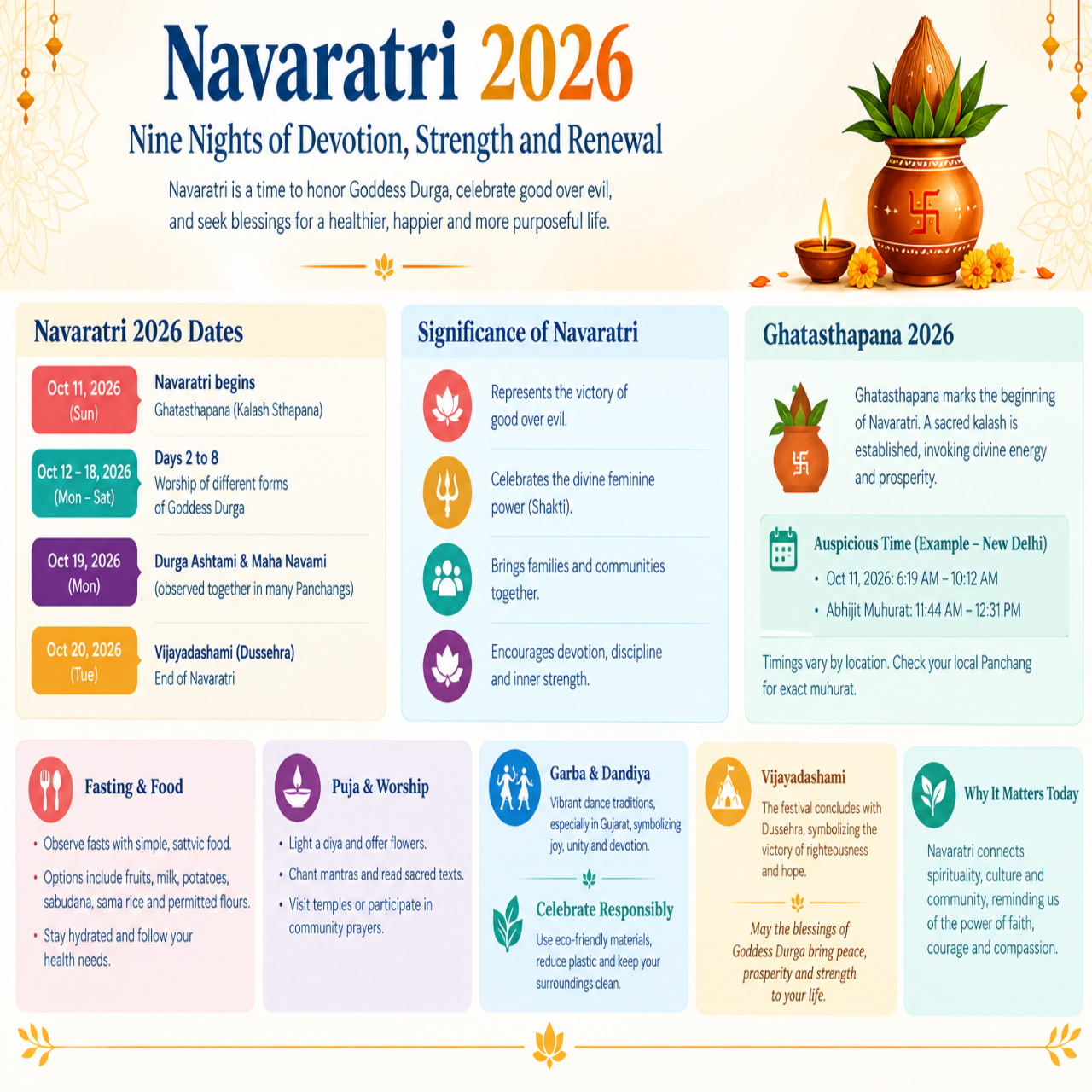
Sharad Navaratri, also called Shardiya Navratri, is the most widely observed Navaratri of the year. In 2026, Sharad Navaratri begins on Sunday, October 11 and continues through October 19, followed by Vijayadashami or Dussehra on Tuesday, October 20. The first day is marked by Ghatasthapana or Kalash Sthapana, an important ritual that formally begins the Navaratri observance.
Navaratri 2026 Dates
Sharad Navaratri begins on October 11, 2026.
Ghatasthapana will be observed on October 11.
The nine-day worship period continues through October 19.
Durga Ashtami and Maha Navami are observed together on October 19 according to several 2026 Panchang calculations.
Vijayadashami, also known as Dussehra, will be celebrated on October 20, 2026.
The exact puja timings can vary according to location because Hindu Panchang calculations depend on local sunrise, sunset and other astronomical factors. For this reason, people should check their local Panchang when planning Ghatasthapana and other important rituals.
What Is Navaratri?
The word Navaratri means nine nights. The festival traditionally lasts for nine nights and ten days, during which devotees worship different forms of Goddess Durga.
Navaratri represents the victory of divine power over negativity and the triumph of good over evil. The festival also provides an opportunity for devotees to focus on prayer, self-discipline, devotion and inner strength.
Although Navaratri is celebrated throughout India, customs vary significantly from one region to another. Gujarat is famous for Garba and Dandiya Raas, West Bengal is known for Durga Puja, Maharashtra observes devotional and cultural traditions, while several northern and southern regions have their own distinctive forms of worship and celebration.
Significance of Navaratri
Navaratri is associated with Goddess Durga, who represents Shakti, or divine feminine power. Her different forms symbolize qualities such as courage, knowledge, discipline, compassion and spiritual strength.
For many devotees, the nine days are a time to reduce distractions and concentrate on prayer and positive habits. Fasting, meditation, reading sacred texts, visiting temples and participating in devotional activities are common practices.
The festival is also connected with the broader idea that righteousness ultimately overcomes destructive forces. This theme is reflected in the celebration of Vijayadashami at the conclusion of Navaratri.
Ghatasthapana 2026
Ghatasthapana, also known as Kalash Sthapana, marks the beginning of Sharad Navaratri. A sacred kalash is established during an auspicious period, symbolizing the presence of divine energy.
In New Delhi, one Panchang calculation gives the Ghatasthapana Muhurat on October 11, 2026 as approximately 6:19 AM to 10:12 AM, with an Abhijit Muhurat of approximately 11:44 AM to 12:31 PM. Timings vary by location, so these should not be treated as universal timings for every city in India.
The traditional ceremony may include preparing a clean worship area, placing soil and seeds, establishing the kalash, lighting a lamp and invoking Goddess Durga through prayers and mantras.
Nine Forms of Goddess Durga
Each day of Navaratri is traditionally associated with one form of Goddess Durga.
Day 1: Goddess Shailaputri
Shailaputri is worshipped on the first day. Her name means daughter of the mountain. She is associated with strength, stability and devotion.
Day 2: Goddess Brahmacharini
Brahmacharini represents devotion, determination and spiritual discipline. Her worship is associated with patience and inner strength.
Day 3: Goddess Chandraghanta
Chandraghanta is depicted with a crescent moon on her forehead. She represents courage, peace and protection.
Day 4: Goddess Kushmanda
Kushmanda is traditionally associated with creative energy and the origin of cosmic life. Devotees worship her for health, vitality and prosperity.
Day 5: Goddess Skandamata
Skandamata is the mother of Lord Skanda. She represents motherhood, compassion and protective strength.
Day 6: Goddess Katyayani
Katyayani is associated with courage and determination. She is worshipped as a powerful form of Goddess Durga.
Day 7: Goddess Kalaratri
Kalaratri is considered a fierce form of the Goddess. Her worship represents the destruction of fear, darkness and negative forces.
Day 8: Goddess Mahagauri
Mahagauri symbolizes purity, peace and spiritual clarity. Ashtami is considered an important day for Durga worship.
Day 9: Goddess Siddhidatri
Siddhidatri is traditionally associated with spiritual accomplishments and divine blessings. Navami marks the completion of the main nine-day worship period.
In 2026, the calendar has a special arrangement in which Ashtami and Navami are observed together on October 19 in several Panchang calculations.
Navaratri Fasting and Food
Fasting is an important part of Navaratri for many devotees, although practices vary according to family traditions, regional customs and individual health needs.
Some people observe a complete fast, while others eat selected foods such as fruits, milk, potatoes, sabudana, sama rice and certain permitted flours. Rock salt is commonly used instead of regular table salt in many fasting traditions.
A simple and balanced approach is important. People who have medical conditions, take regular medication, are pregnant, or have specific dietary requirements should follow appropriate professional advice rather than adopting a restrictive fast without guidance.
Navaratri Puja and Daily Worship
Daily worship during Navaratri may include lighting a diya, offering flowers, chanting mantras, performing aarti and reading devotional texts.
Some devotees recite Durga Saptashati or other texts associated with Goddess Durga. Others visit temples or participate in community prayers.
The purpose of these practices is not only ritual observance but also creating a period of concentration, gratitude and spiritual discipline.
Garba and Dandiya During Navaratri
Garba and Dandiya are among the most recognizable cultural traditions associated with Navaratri, particularly in Gujarat and other parts of India.
Garba is traditionally performed in a circular formation around a lamp or symbolic representation of divine energy. Dandiya Raas is performed using decorated sticks and is often organized as a lively group celebration.
Today, Navaratri events can range from traditional community gatherings to large cultural programs featuring music, dance and elaborate decorations.
Navaratri Celebrations Across India
Navaratri has many regional expressions.
In Gujarat, Garba and Dandiya celebrations attract large community gatherings.
In West Bengal, the period is closely associated with Durga Puja, during which beautifully decorated pandals, artistic idols, cultural programs and devotional ceremonies become central to the celebration.
In Maharashtra, Navratri is observed through household worship, temple visits, cultural programs and community celebrations.
In Karnataka and other southern states, traditions such as Golu or Bommai Kolu are associated with the Navaratri season in some communities.
These different traditions demonstrate the cultural diversity of India while maintaining the central theme of devotion to divine feminine power.
Navaratri and the Meaning of Vijayadashami
Navaratri concludes with Vijayadashami, also called Dussehra.
The day symbolizes victory over evil and the restoration of righteousness. In different parts of India, the festival is associated with different stories and traditions.
In the Ramayana tradition, Vijayadashami is associated with Lord Rama's victory over Ravana. In the Durga tradition, it is connected with the victory of Goddess Durga over Mahishasura.
Vijayadashami therefore represents courage, righteousness and the belief that positive forces can overcome destructive ones.
Navaratri 2026 and Sustainable Celebrations
Modern Navaratri celebrations can combine tradition with environmental responsibility.
People can choose reusable decorations, natural flowers and eco-friendly materials. Community organizers can reduce single-use plastic and manage waste responsibly.
For large Garba and Dandiya events, organizers can encourage reusable cups, proper waste segregation, efficient lighting and responsible use of resources.
Simple choices can help preserve the festive atmosphere while reducing environmental impact.
How to Celebrate Navaratri Mindfully
Navaratri does not need to be limited to elaborate celebrations. A meaningful observance can be simple and personal.
You can begin the day with prayer or meditation, maintain a clean and peaceful worship area, participate in family traditions, visit a temple, help someone in need or spend time reflecting on positive values.
The festival can also be an opportunity to practice patience, self-control, kindness and gratitude.
For people who participate in Garba and Dandiya, staying hydrated, taking adequate rest and being mindful of physical activity can help make celebrations more comfortable.
Why Navaratri Remains Important Today
Navaratri continues to be relevant because it connects spirituality with community and culture.
For devotees, it provides a structured period for worship and self-discipline. For families, it creates opportunities to maintain traditions and pass cultural knowledge to younger generations. For communities, it brings people together through music, dance, religious ceremonies and social activities.
The festival also carries a broader message of resilience. The different forms of Goddess Durga represent different aspects of strength, reminding people that courage can take many forms.
Navaratri 2026: A Time for Devotion and Renewal
Sharad Navaratri 2026 begins on October 11 and leads into Vijayadashami on October 20. From Ghatasthapana and daily worship to Garba, Dandiya, Durga Puja, and regional traditions, the festival brings together spirituality and culture in many different ways.
Whether celebrated through fasting, prayer, temple visits, community events or quiet personal reflection, Navaratri offers an opportunity to focus on positive values and inner strength.
As families and communities celebrate Navaratri 2026, the central message remains timeless: faith, courage, discipline, and righteousness can help overcome darkness and bring renewed hope.

0 comments
Be the first to add a thoughtful comment.
Leave a comment
Your email will not be published. Comments are moderated.